


Other Type Pumps
Your Professional Other Type Pumps Supplier
Suzhou Medas Co., Ltd. is a professional manufacturer and seller of water pumps. Our product range includes submersible pumps, garden pumps, household pumps, cast iron pumps, and more. Whether for agricultural irrigation, urban water supply and drainage, or fluid transport and pressure boosting in industrial applications, pumps play a vital role.
Strong Industry
Founded in 1997, MEDAS has grown into a nationwide supplier with deep knowledge in pumps and garden machinery, supported by a highly educated and experienced team.
Quality You Can Trust
We follow strict quality systems and hold major certifications, including ISO 9001, BSCI, GS, CE, and UL. “Quality comes first” guides every step from design to production.
Proven Product Performance
Our tools and lawn mowers have won awards for design, practical value, and cost-effectiveness in Europe, demonstrating our strong competitiveness in global markets.
Full OEM/ODM Capabilities
With in-house development, tooling, and production, we offer complete custom solutions from unique designs to quick adjustments ensuring fast lead times and low investment.




Parameter
|
Pump Type |
Typical Flow Rate |
Typical Head / Lift / Pressure |
Motor / Power / Voltage / Phase |
|
Deep Well Pump |
Up to 18–20 m³/h (≈ 300–333 L/min) |
Up to ~ 170–350 m head (depending on model & stage) |
Motor power 1.5 kW (2 HP) to 7.5 kW (10 HP); Single-phase or Three-phase; Typical 50 Hz / 60 Hz options |
|
Fountain Pump |
10 – 250 m³/h (≈ 167 – 4,167 L/min) depending on pump size |
Head (lift) 5 – 120 m depending on model and use (fountains, water display) |
Motor power 0.5 kW – 7.5 kW for small to mid-size fountain pumps; install vertical or horizontal. |
|
Vibration Pump |
Lower flow rates — Often in hundreds of L/h to low thousands L/h (depending on motor) |
Lift / head lower (depending on design) — Typically suitable for shallow water or low lift cases |
Low-power motors; Single-phase, small footprint |
Types of Other Type Pumps
The other type pumps produced by our company mainly include the following types:
Deep Well Pump
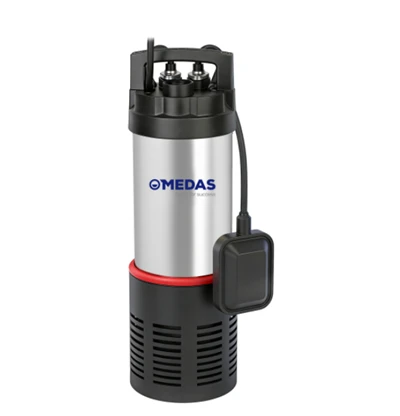
With a sleek, cylindrical stainless-steel body and a robust black base, it combines durability and a modern look. Its core strength lies in the efficient submersible design - it operates quietly deep in wells, lifting water powerfully even from significant depths.
Vibration Pump
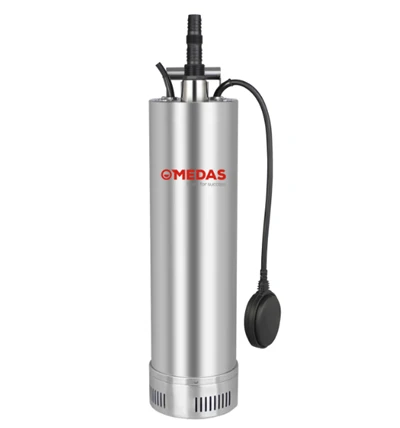
Boasting a sleek, all-stainless-steel cylindrical design, it's compact yet sturdy. Its core strength is the vibration-driven mechanism - It operates quietly, delivering consistent fluid transfer for applications like small-scale irrigation, aquarium filtration, or household water-moving tasks.
Fountain Pump
With a sleek, compact stainless-steel and black design, this pump adds a touch of elegance to any fountain setup. Its core strength lies in efficient water-moving technology - It creates consistent, gentle water flows, ideal for small to medium-sized fountains in gardens, patios, or indoor spaces.

Advantages of Other Type Pumps
Deep Well Pump
Deep well pumps have many advantages, including:
☆ Suitable for situations with deep wells, it can provide a high flow water source. For scenarios that require the transportation of large amounts of water resources,
☆ It can reduce the footprint of ground equipment and save space on the site. The deep well pump is placed in the well and does not occupy ground space, effectively avoiding the problem of equipment occupation.
Vibration Pump
Vibration pumps have many advantages, including:
☆ Quiet Operation: Vibration pumps are known for their quiet operation. The absence of mechanical parts like diaphragms or pistons reduces vibration and noise, making them ideal for environments where a quiet operation is desirable, such as bedrooms or offices.
☆ Energy Efficiency: Vibration pumps are generally more energy-efficient compared to traditional models. Their design allows for a smoother and more efficient transfer of energy, resulting in less power consumption.
☆ Reduced Maintenance: Traditional air pumps with moving parts, such as diaphragms or pistons, may require more maintenance over time due to wear and tear. vibration pumps, with fewer moving parts, often have a longer lifespan and require less frequent maintenance.
☆ Compact Design: The absence of large mechanical components allows for a more compact design in vibration pumps. This can be advantageous in situations where space is limited or when a sleek and unobtrusive design is preferred.
☆ Adjustable Flow: Many vibration pumps come with adjustable flow settings, allowing users to control the amount of air being delivered. This flexibility is useful in various applications, such as aquariums with different oxygen requirements for various aquatic species.
Fountain Pump
Fountain pumps have many advantages, including:
☆ Energy Efficiency: Fountain pumps often use less energy, reducing electricity usage.
☆ Water Circulation: Ensures continuous water movement, preventing stagnation.
☆ Versatility Can be used in various water features like ponds and fountains.
☆ Aesthetic Appeal: Enhances visual aspects and tranquility of outdoor spaces.
☆ Low Maintenance: Requires minimal upkeep, saving time and resources.
☆ Natural Filtration: Helps filter out impurities, leading to cleaner water.
☆ Sound and Relaxation: Creates soothing sounds, enhancing relaxation in surroundings.
Applications of Other Type Pumps
Deep Well Pump
Deep well pumps can be used for a variety of purposes, including:
Agricultural Irrigation
Agriculture remains the largest user of deep well pumps. Farmers rely on them to draw groundwater for irrigation, especially in arid regions. With climate change increasing drought frequency, efficient water extraction is vital.
Municipal Water Supply
Municipalities depend on deep well pumps to supply clean drinking water to urban populations. These pumps are critical in areas where surface water sources are contaminated or insufficient.
Industrial Processing
Industries such as mining, chemical manufacturing, and power generation utilize deep well pumps for process water, cooling, and waste management. These pumps handle high volumes of water, often with specific chemical properties.
Oil & Gas Extraction
In the oil and gas sector, deep well pumps are used for artificial lift systems, especially in offshore and onshore drilling. They facilitate the extraction of hydrocarbons from deep reservoirs.
Residential Groundwater Access
In rural or remote areas, deep well pumps provide households with reliable groundwater access. These pumps are often powered by solar panels or generators, making them suitable for off-grid locations.
Vibration Pump
Vibration pumps can be used for a variety of purposes, including:
Domestic water supply
Vibration water pumps are designed to lift clear water from sources like boreholes, wells, and reservoirs for domestic use or garden watering.
Construction and dewatering
Used for draining construction sites, tunnels, and pipelines, as well as for managing flood control and groundwater lowering.
Aquariums and aquaculture
Vibration air pumps are used to circulate air in aquariums and for various applications in aquaculture.
Fountain Pump
Fountain pumps can be used for a variety of purposes, including:
Pondless Fountain
You might be interested in a water feature even if you don’t want a traditional waterfall or pond fountain. Consider a pondless or disappearing fountain.
Private Creek
Embrace a natural slope on your property with a creek. Collect water in one place and pump it to create a creek for a beautiful, naturalistic solution.
Fire and Water Feature
If you have a smaller yard and don’t want to have to choose between a fire pit and a water feature, consider a combination. These fixtures typically have gas burners or electric lights to mimic fire and fountain components nearby but separated from the fire area for safety.
Hanging Fountain
A hanging fountain is ideal if you have a tiny yard or want to guarantee your dog never uses the water feature as a water bowl.
Freestanding Fountain
Bring the soothing sounds of water to your outdoor living area with a small tabletop fountain, or make a statement with a larger freestanding fountain or water wall.
Precautions for Using Fountain Pumps
Weekly checks
Inspect the water level and top it off if necessary. Remove any visible debris from the fountain and around the pump intake.
Monthly cleaning
Turn off the pump and remove it from the water. Clean the intake and impeller thoroughly, removing any built-up algae or mineral deposits.
Seasonal maintenance
Before winter, if you live in a cold climate, remove the pump and store it indoors to prevent freeze damage. In spring, clean the entire system before restarting.
How to Place Order?
Send inquiry→Basic quotation→Confirm details→ PI & Contact→Pay deposit→Production (7-15 days)→Pay balance→Delivery (5-8 days byair, 28-35 days by sea.) →After-sale service.
Packaging and Shipping
|
Packaging |
Inner bubble bags +carton |
|
Shipping |
It could be shipped by air,by sea or by express(DHL,FEDEX,UPS,EMS). Please confirm with us before placing orders. |
Our Factory
Owned a new factory, which covers 60,000m3 with pumps annual production of 600,000 pcs, and garden tools, 300,000 pcs. Technology is always keeping space with global top brands.


FAQ